



What is a satin bonnet for kids?
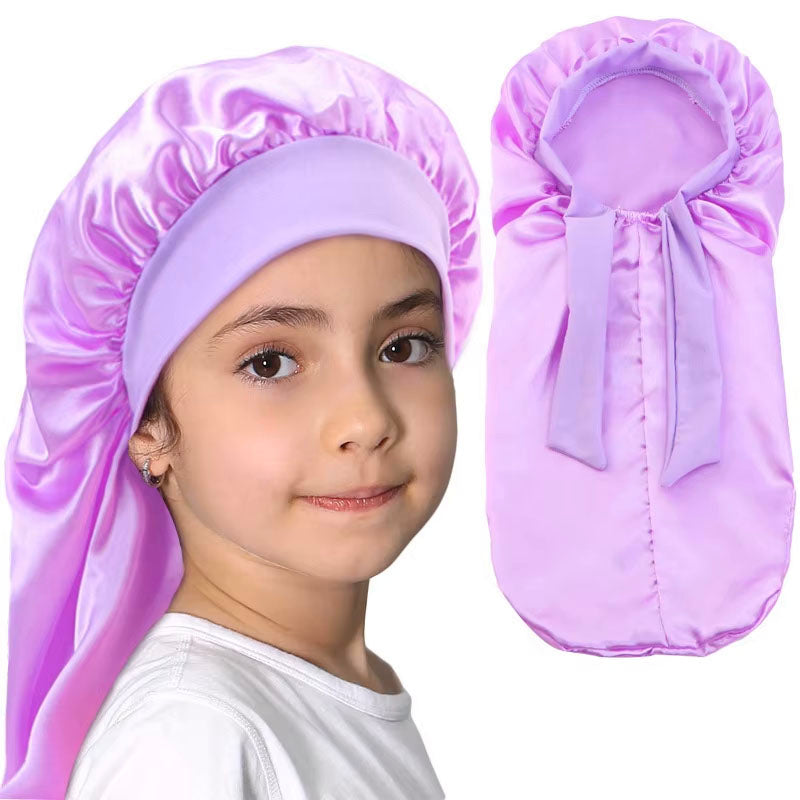
A satin bonnet for kids is a soft, roomy cap that holds a child's hair inside while they sleep. Shops list it as a kids hair bonnet , a hair bonnet for kids or a sleep cap. Most have an elastic fit, a tie, or both. The smooth fabric lets hair slide instead of catching.
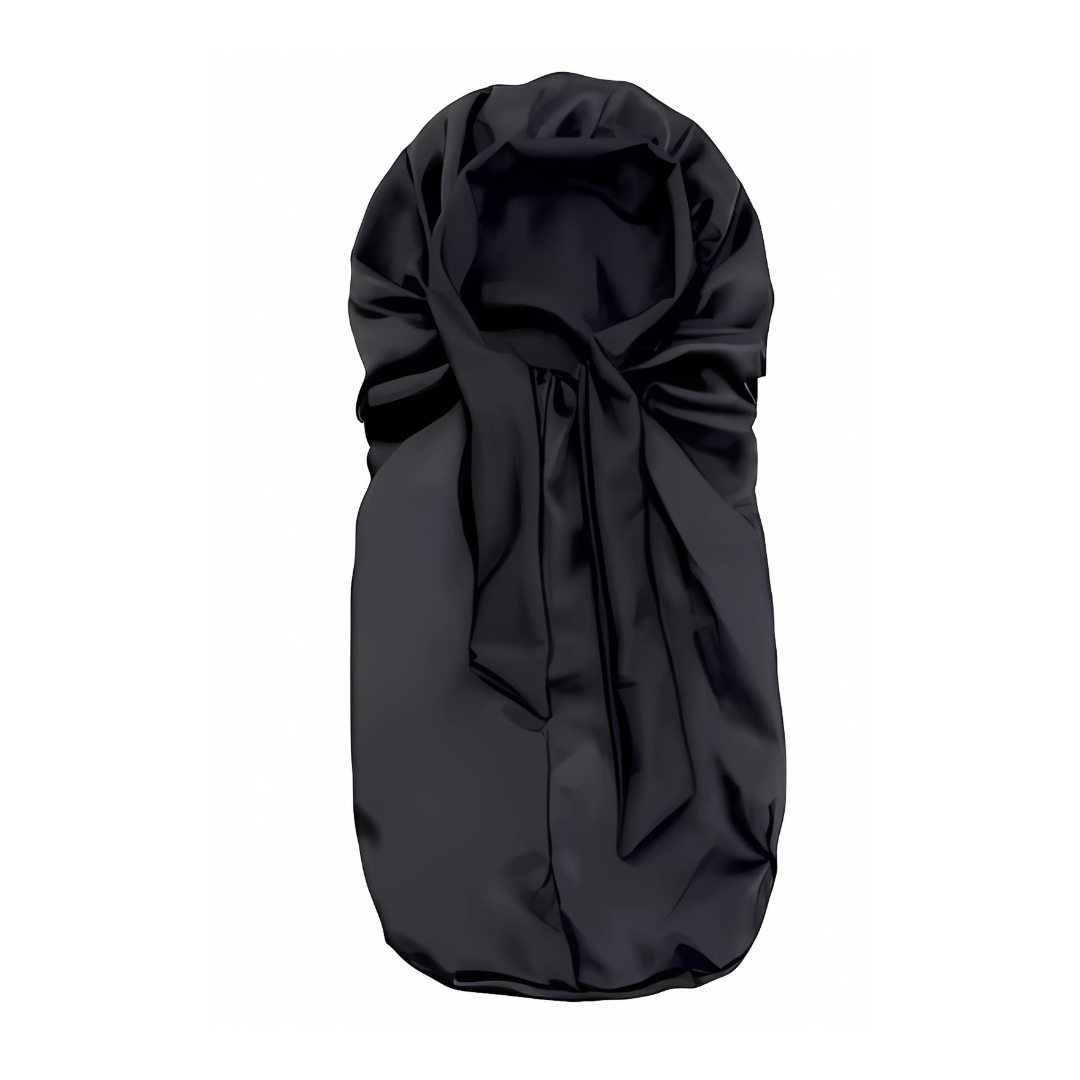
Satin describes how the fabric is woven. Silk is a natural fibre from silkworms. Many bonnets sold as a kids silk bonnet or silk bonnet for kids are polyester satin, so check the fabric tag. Both give hair a smooth surface.
Why is a satin bonnet good for kids' hair? 7 benefits
Here are seven benefits, each with a tip you can use tonight.
1. Fewer tangles
The American Academy of Dermatology (AAD) says curly hair is prone to knots. Kids also toss and turn, and cotton grabs at loose strands. Picture a six-year-old with shoulder-length curls. Without a bonnet, she wakes up with a matted patch at the nape. With one, that same hair may need only a gentle finger comb.
2. Less breakage
AAD dermatologists say thick, curly hair breaks and dries out more readily than other hair types. Hours of rubbing on a cotton pillowcase add to that strain. A smooth bonnet removes one source of it.
3. Moisture stays put
The Society for Pediatric Dermatology explains that curly and coily hair holds less water and has less natural oil along the shaft. Cotton can soak up leave-in conditioner and whatever oil is there. Satin absorbs less. A bonnet keeps moisture in but cannot add it. Dr Brandi Kenner-Bell, a children's dermatologist at Lurie Children's Hospital in Chicago, describes oils as sealants, not moisturisers. Start with water or a leave-in conditioner, then seal.
4. Less frizz
When strands slide instead of snag, each hair's outer layer stays smoother. You may see softer curls and fewer flyaways.
5. Styles last longer
Braids, twists and puffs stay neat overnight, so you redo them less. Twists done on Sunday can look fuzzy by Wednesday after three nights on cotton. Keep the styles loose, too. Dr Kenner-Bell told the 2026 Society for Pediatric Dermatology meeting to loosen braided styles to avoid traction hair loss.
6. Calmer mornings
Fewer knots mean less pulling and fewer tears at brush time. Dermatologists suggest a wide-tooth comb on wet, conditioned hair.
7. A habit kids can own
Let your child pick the colour or print. Make the bonnet the last step after teeth and a story.
Worth knowing: Most bonnet advice rests on how fabrics behave against hair. Dr Kenner-Bell listed sleeping on satin pillowcases among her tips for curly and coily hair, but large trials on bonnets in children are thin. Treat a bonnet for kids' hair protection as one helpful habit. It will not repair hair that is already dry or damaged.
How does a satin bonnet work overnight?
The fabric gives hair a smooth surface, so strands glide. The cap also keeps hair together, so loose ends cannot fan out across the pillow and catch. Try this routine:
-
Detangle early in the evening with a wide-tooth comb on damp, conditioned hair.
-
Add a leave-in conditioner. Let hair dry, or get it close, because hair is delicate when wet.
-
Style it loose: one or two soft braids, twists or a loose puff on top.
-
Gather all the hair inside the bonnet. Snug is right. Tight leaves marks and pulls at the hairline. Keep the tie at the head, away from the neck.
-
Run a roll test. Ask your child to roll around and shake their head. If the bonnet shifts, adjust it.
-
In the morning, check the skin at the hairline and behind the ears for red marks. Then take the bonnet off and finger-fluff the hair.
When should kids start wearing a sleep bonnet?
Not before their first birthday. Red Nose Australia says a baby's head and face stay uncovered for sleep, and beanies and hats come off.
Safety note: Skip bonnets for babies under 12 months. For older children, make sure your child can pull it off alone. Remove it if they feel hot or sweaty.
After 12 months, start when hair is long enough to knot or curly enough to dry out. Ask your doctor if you are unsure about a toddler. Use the bonnet most on wash-day nights and with braids or twists. On hot summer nights, a sleep bonnet for kids made of synthetic satin can feel warm. A satin pillowcase gives some protection without covering the head.
Which is better: a satin bonnet or a satin pillowcase?
|
Option |
Friction on hair |
Covers hair if child rolls off the pillow |
Best for |
|
Cotton pillowcase |
Higher |
No |
Short, straight hair |
|
Satin pillowcase |
Low |
No |
Kids who refuse a cap, hot nights |
|
Satin bonnet |
Low |
Yes |
Curly, long or braided hair |
A satin bonnet for curly hair covers everything, even when your child rolls away from the pillow. A pillowcase stays put and suits kids who will not wear a cap. Using both gives you a backup.
Where can you buy a satin sleeping bonnet for kids in Australia?
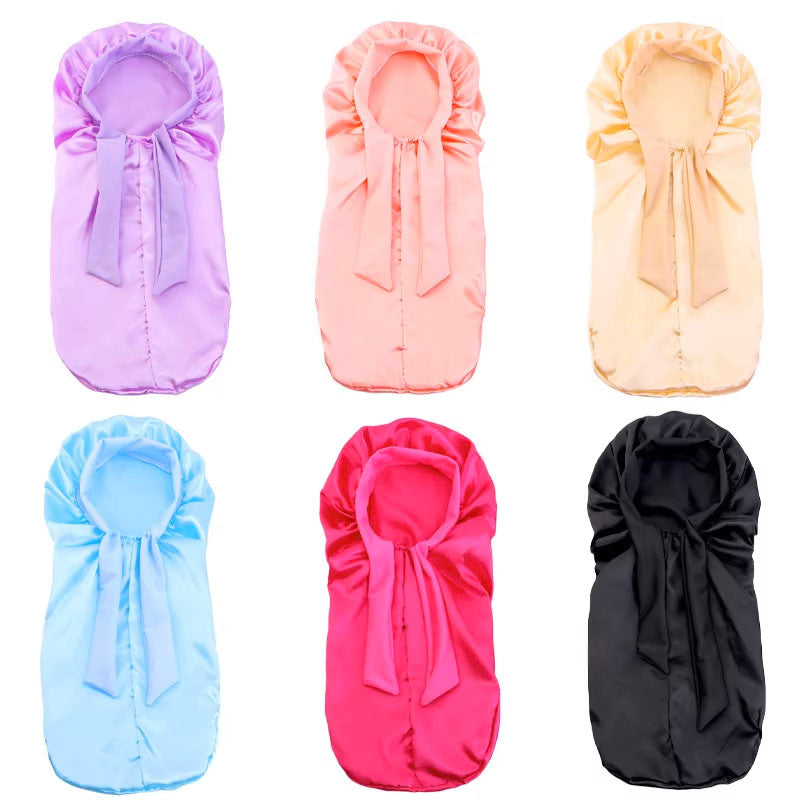
Listings for a satin sleeping bonnet for kids vary a lot, so use a short checklist. A good kids' sleeping bonnet holds all the hair without pressing on the scalp. Look for a roomy shape, soft elastic, an adjustable tie and smooth seams.
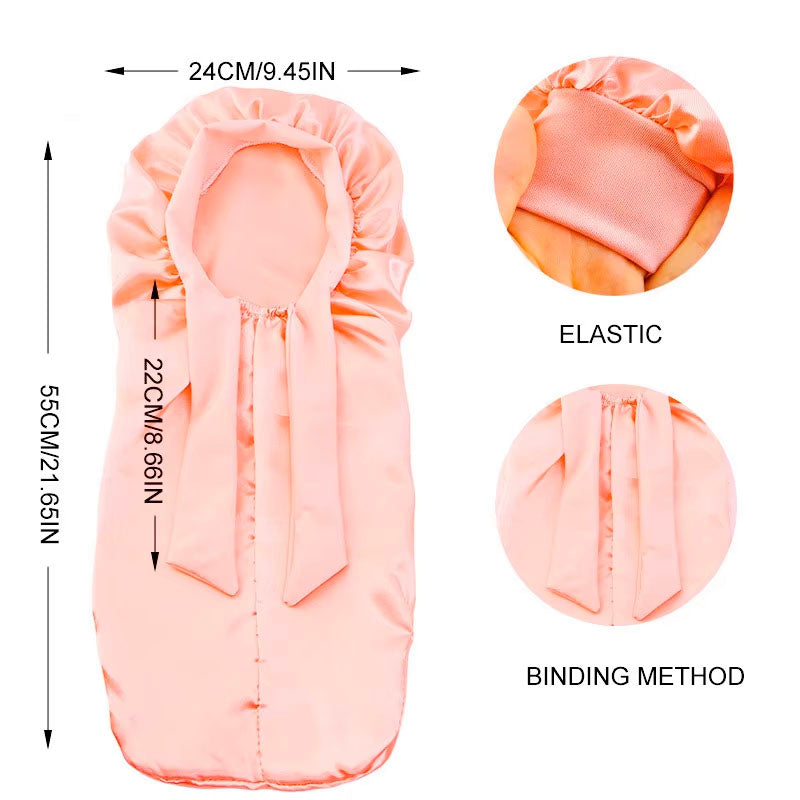
Blow Out Babe, a Gold Coast hair tools and hair care store, sells a Kids Sleeping Bonnet with Tie Up . The product page lists soft polyester, a 33 cm diameter, an elastic fit, an adjustable tie, and a design for all hair types and lengths. At the time of writing it costs $19.90 AUD, down from $29.95. The store offers free shipping Australia-wide on orders over $120. Parents can also pick up an adult bonnet from the Sleep & Hair Protection collection .
FAQs
Do satin bonnets really work for kids?
The mechanism is sound. Smooth fabric cuts friction, and the cap keeps hair together. Curly, long and braided hair gain the most. Research on bonnets in children is limited, so expect a likely benefit, not a guarantee.
Can babies sleep in a satin bonnet?
No. Red Nose says to keep a baby's head and face uncovered during sleep. That advice covers the first 12 months.
Does a bonnet make my child's hair grow faster?
No. Hair grows at a similar pace across people. Curly hair breaks more easily, so it can look like it stopped growing. Dr Kenner-Bell said retention is the main challenge. A bonnet helps hair keep the length it already grew.
What is the difference between a silk bonnet and a satin bonnet?
Silk is a natural fibre. Satin is a weave that can use silk, polyester or other fibres. Real silk costs more. Whether you choose a satin hair bonnet for kids or a silk one, both give hair a smooth surface. Pick by budget and comfort.
How do I keep a bonnet on a restless sleeper?
A kids satin sleeping bonnet with a snug elastic fit and an adjustable tie stays put best. Let your child practise wearing it during the day. Loose braids or a soft puff underneath keep hair contained. A satin pillowcase covers the nights it slips off.